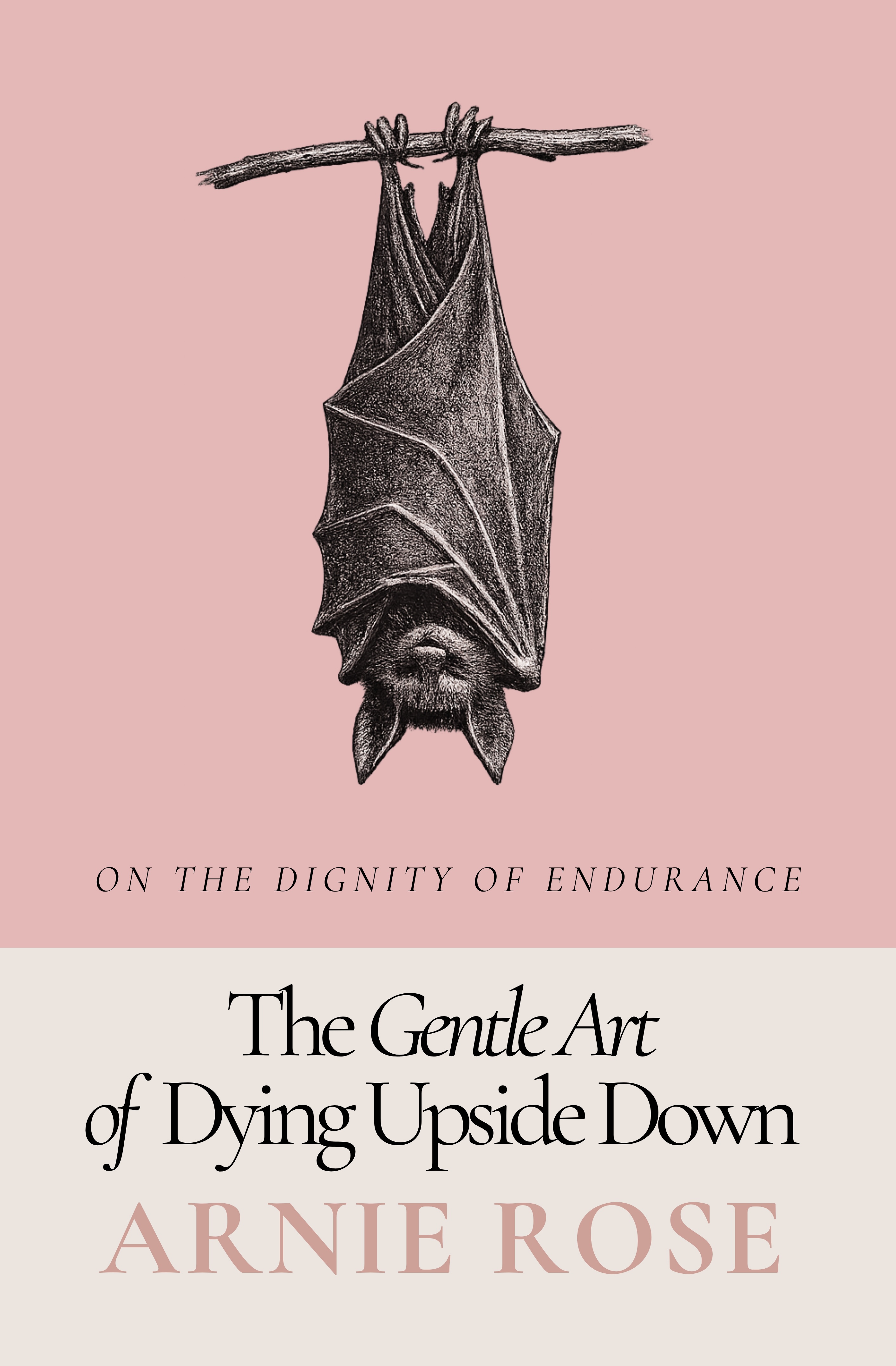
The Gentle Art of Dying Upside Down
Why Starting Over Is Hard, and Why It Is Still Worth It
July 16, 2026 · 7 minute read
What fascinates me most about human behavior is not why people fall apart. It is why they keep functioning, for years, inside a life they have privately already left. Writing The Gentle Art of Dying Upside Down, I kept returning to the same observation. Almost nobody starts over in one dramatic moment. They start over in private, long before it becomes visible to anyone else, and the visible part, the announcement, the move, the goodbye, is usually just the last small step in something that began quietly, months or years earlier.
That gap is where most of the real work happens, quietly, long before anyone else notices.
Starting over is hard because you are not just changing your circumstances. You are changing the story you have been telling yourself about who you are, and that story does not update on command just because your circumstances did.
What Is Actually Happening
This is why starting over so rarely feels like relief, even in situations where the thing you are leaving was obviously not working, where anyone watching from the outside could see it had been over for a while. Relief comes later, if it comes at all. First it just feels like standing in a room after the furniture has been moved out, aware of the space but not yet sure what to do with it.
This shows up everywhere change happens, not only in the obvious places. Leaving a job. Ending a marriage. Watching your children leave home and realizing the version of you built entirely around that role no longer has a job to do. Retiring from a career you built your entire identity on. Moving to a new city and discovering that half of what you thought was personality was actually just proximity to familiar things. None of these announce themselves as starting over while they are happening. They just feel like an ordinary, disorienting Tuesday that keeps repeating, until one day you notice the Tuesdays have quietly added up to something with a different shape than the life you thought you were still living.
Why This Happens
Your brain prefers the familiar over the better. That sounds backward when the familiar thing is clearly not working, but it is true. A routine that is quietly unhappy still uses less energy than a new one, because your brain already knows every step of it. So even when the old version of your life has stopped serving you, some part of you keeps defending it, not because it was good, but because it was known.
Underneath that is usually a story. Maybe you are the one who finishes what they start. Maybe your life is supposed to look a certain way, and any deviation feels like proof of failure. Starting over threatens that story, which is why it fights back so hard. None of what it tells you is true. It is just the story defending its own continuity.
This is not a character flaw. It is not fear of success, or self-sabotage. It is wiring, doing exactly what it was built to do. Knowing that will not make the discomfort disappear, but it does mean you can stop treating discomfort as proof you are making the wrong decision.
You Might Be Ready to Begin Again If
- You already know the ending, you are just waiting for permission to act on it.
- You rehearse the conversation before you have ever had it.
- You are more tired of staying than you are afraid of leaving.
- You have started imagining the next chapter more often than you used to.
New Release
The Gentle Art of Dying Upside Down
What it costs to keep the old story running, and what becomes possible the moment you finally set it down.
Learn More
A Different Way to Look at It
Most people wait to feel ready before they start over. It feels responsible, even wise, to wait for certainty before making a change this size. Here is the problem with that plan. Readiness, as a feeling, rarely arrives first. Confidence tends to show up after you have already taken the step, not before, because your brain builds confidence from evidence, and there is no evidence yet for something you have not done. You are still becoming whoever comes next, and that becoming does not wait for permission. If letting go of the old version is the part you are stuck on, that is its own separate piece worth reading, since the two rarely happen in the order people expect.
Starting over also does not erase what came before it. You do not lose eleven years of experience because you change fields. You do not lose what you learned about love because a relationship ended. Everything you actually built stays built. Your timeline was never actually behind schedule, you are simply choosing what to build next on top of it, instead of assuming the new foundation has to be identical to the one you are leaving.
Try This This Week
You do not need a complete plan to start over. You need one action, small enough to actually take this week, that moves you from thinking about the change to being inside it.
- Send the message you have been drafting in your head.
- Fill out the one form you keep putting off.
- Say the true thing out loud to a single person before you say it to everyone else.
Big transformations get remembered afterward as single dramatic moments. Almost none of them actually happened that way. They happened as a sequence of small, unremarkable decisions that only look dramatic once you are far enough away to see the whole shape of them. That does not make starting over easy. It makes it possible, which is the more useful thing to aim for.
The Blind Spot
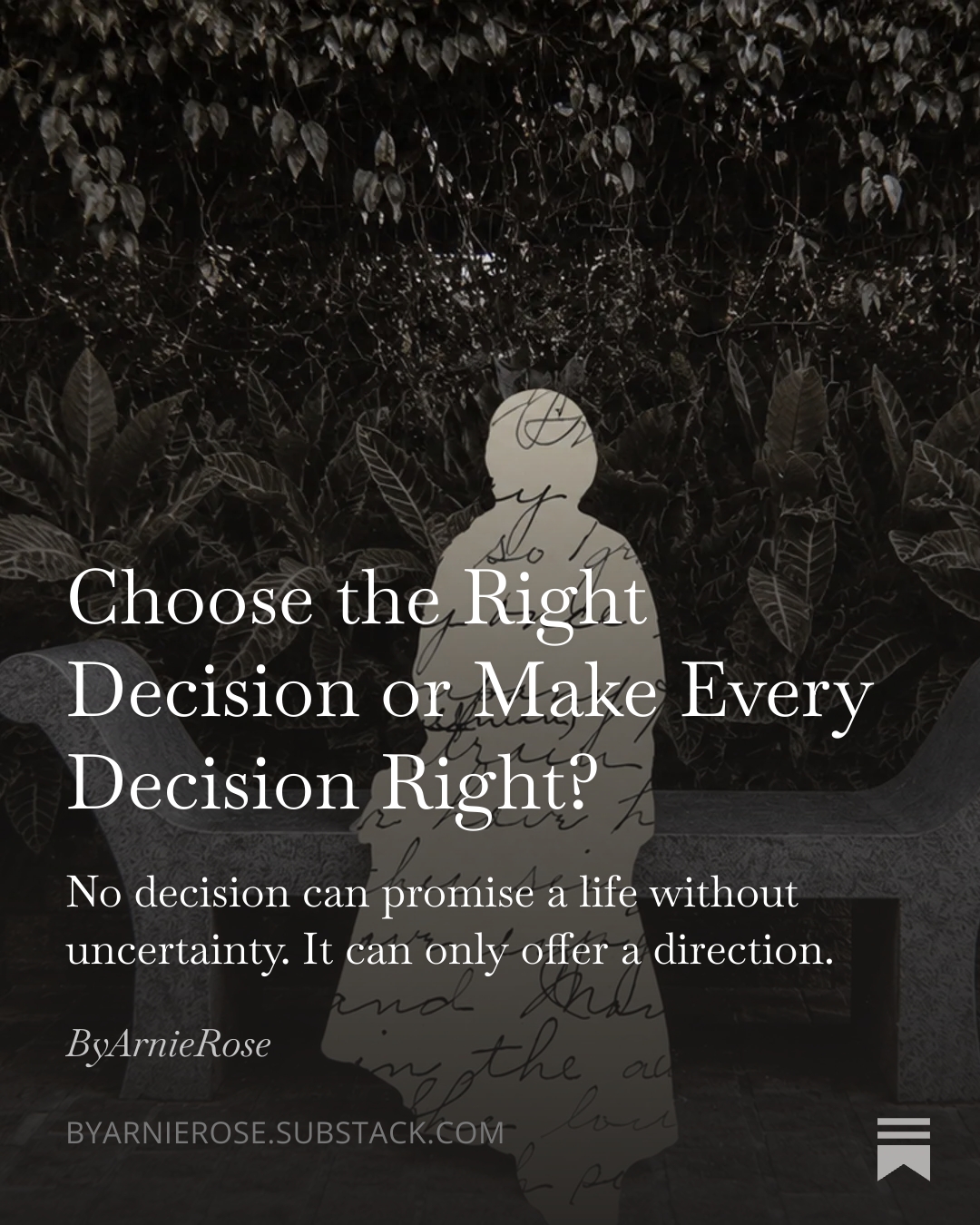
“You don’t discover the right decision. You become the person who makes it right.”
Continue on Substack →
Every ending asks us who we're willing to leave behind. Every beginning asks us who we're ready to become.
FROM THE GENTLE ART OF DYING UPSIDE DOWN
Starting over is not one decision. It is hundreds of small ones, made quietly, long before anyone else notices anything has changed.
Before You Go
- You do not have to feel ready.
- You only have to take the next step.
- Starting over does not erase what came before.
- Every beginning costs something. That is not a warning sign.