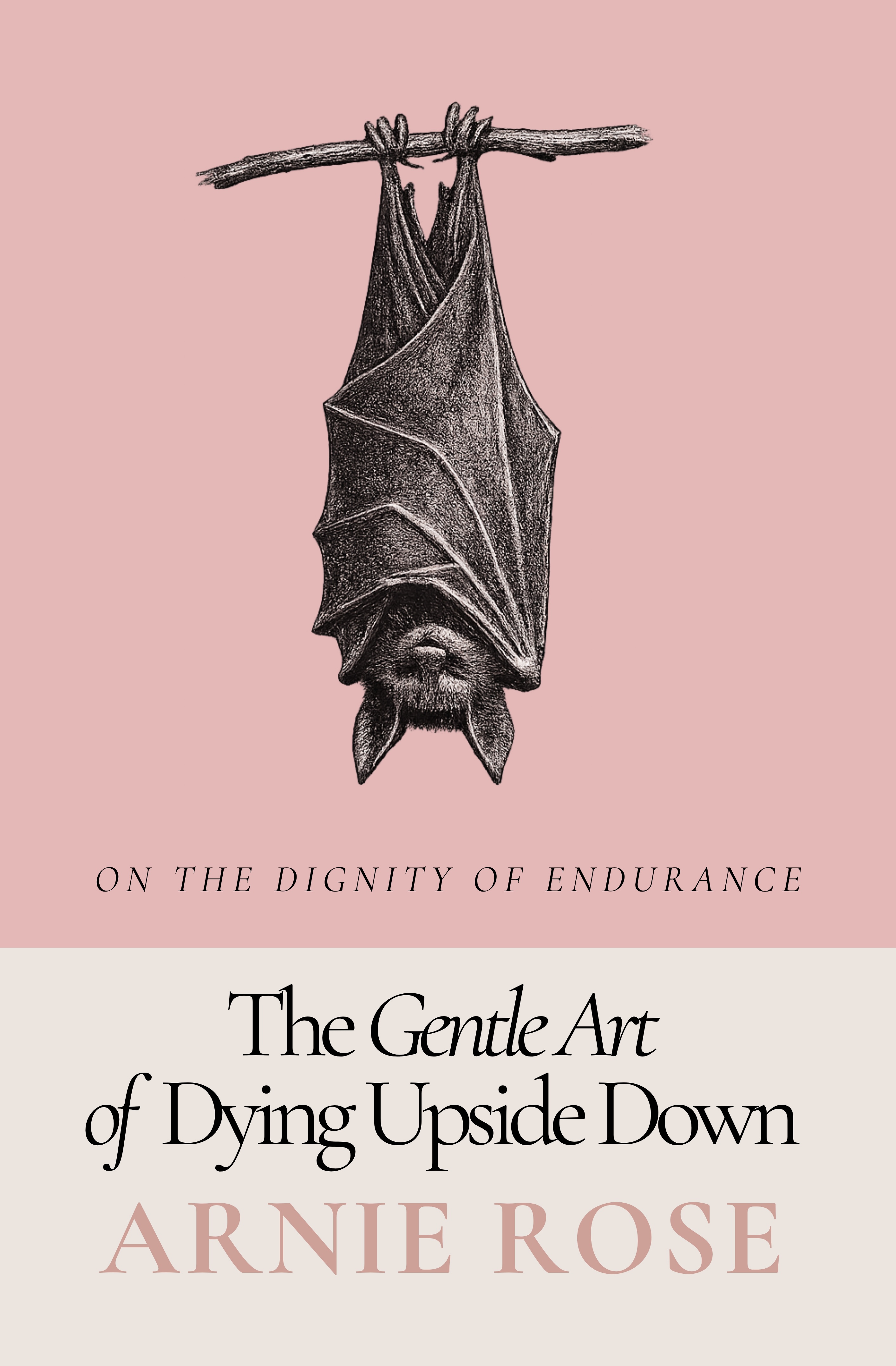
The Gentle Art of Dying Upside Down
The Gentle Art of Letting Go Without Losing Yourself
July 14, 2026 · 7 minute read
I have spent years writing about people trying to become someone else, and somewhere in that work I got fascinated by a smaller, stranger question. What actually happens in the moment someone realizes they have outgrown a life that used to feel like home. Not the dramatic before and after everyone talks about afterward. The actual moment. The one where nothing external has changed yet, but something internal already has.
That question became The Gentle Art of Dying Upside Down, and it is the same question underneath this piece. Letting go is rarely about the thing you are releasing. It is about whether you believe you will still recognize yourself once your hands are empty. That is the fear I keep meeting in every version of this story, whether it is a job, a marriage, a friendship, or just a way of being that stopped fitting a long time ago and nobody noticed.
You do not lose yourself by letting something go. You lose yourself by staying in the shape of something that already ended, long after your hands knew it was over. That is the part nobody tells you about change. It is not the letting go that costs you. It is the holding on, past the point where holding on was doing anything at all.
What Is Actually Happening
There is probably something in your life right now that you are still carrying out of habit rather than need. A job you keep explaining instead of leaving. A friendship you keep checking on long after it stopped checking back. A version of yourself, the reliable one, the strong one, that made sense once and now mostly just makes you tired. Who you are becoming rarely announces itself before who you were is finally set down.
Your body usually knows before you do. Your chest tightens a little when the subject comes up. You get unusually tired after conversations that should not have been tiring. You sleep fine until you have to think about the actual decision, and then you do not sleep well at all. That tightening is not random. It is information your body has already worked through, waiting for the rest of you to catch up.
This shows up in ordinary, unremarkable places, which is part of why it is so easy to miss. It looks like a job you have outgrown but still defend in conversation, listing its benefits to people who did not ask, as if you are still trying to convince yourself. It looks like a friendship, a marriage, a stage of parenting, a city you moved to for reasons that no longer apply. None of these look dramatic from the outside. They rarely announce themselves. They just sit there, quietly costing you more than they give back, until one ordinary day you finally notice.
Why This Happens
1. Letting go got confused with defeat.
Somewhere along the way, letting go got confused with defeat, as if releasing something proves you failed to hold it, and holding on, no matter the cost, is proof of character. This confusion runs deep enough that people stay in situations actively harming them because the alternative has been quietly rebranded in their mind as quitting.
2. We confuse history with belonging.
Because something has been part of your life for years, it starts to feel like it must still belong there, when really it has just been there a long time. Time and rightness are not the same measurement, even though they get treated like they are. A relationship can be long and wrong at the same time. A job can be familiar and finished at the same time. Duration is not proof of fit.
3. There is a quieter fear underneath both.
It is rarely about the job, or the friendship, or the identity itself. It is the fear that without it, there will be nothing left of you to recognize, that if you take away the role, the title, the routine, you will find an empty room where a self was supposed to be. That fear deserves to be named directly, because once it is named, it is usually treatable. You are not your job. You are not the role you played in a friendship that already changed shape without asking your permission. You are not even the story you have told yourself about who you are, the one where you are always fine, always the one holding everyone else together. That story was useful. It is also allowed to end. You are still here underneath it. Starting over is hard for exactly this reason, and worth it for the same one.
You Might Be Holding On If
- You keep hoping things will return to how they used to feel.
- You already know it is over, but cannot quite act like it.
- You are more afraid of who you will be after than of staying.
- You are waiting for a clean ending before you let yourself move.
If two or three of these are true, you are not confused. You are just at the part where knowing and doing have not caught up with each other yet, which is a much more ordinary place to be than it feels like from inside it.
New Release
The Gentle Art of Dying Upside Down
A book about holding on, letting go, and the particular courage it takes to begin again without losing yourself.
Learn More
A Different Way to Look at It
Most advice says let go because it is healthy, which is true and not very useful at two in the morning. Here is a better question. What if letting go is not losing something. What if it is making space for what actually fits now.
Letting go does not erase what the thing meant while it was real. The job still counts. The friendship still happened. The version of you that needed to be the reliable one got you through something real, and that version served its purpose. None of that gets deleted when you stop carrying it forward. What changes is your relationship to it, not the fact of it. Growth is not always visible while it is happening, and people often think letting go means the years spent were wasted. They were not wasted. They just were not meant to be permanent.
Try This This Week
Pick the one thing that came to mind while you were reading this. Write down what it gave you. Then write down what part of that you would still have even without it. Most people are surprised by how much survives the list. That is the whole practice. Not five steps. Just an honest look, in your own handwriting, where it is harder to lie to yourself than it is out loud.
One more thing worth saying here. Letting go rarely happens in private. The people around you may not understand the timing, and you do not owe every one of them a complete explanation. You owe yourself an honest one. Someone else's confusion about your decision is not evidence that the decision was wrong.
The Blind Spot
“You don’t discover the right decision. You become the person who makes it right.”
Continue on Substack →
There comes a quiet morning when you realize the weight you have carried is no longer teaching you anything. It is only asking to be carried again. On that morning, you get to choose gentleness over resistance.
FROM THE GENTLE ART OF DYING UPSIDE DOWN
Every ending asks us who we are willing to leave behind. Every beginning asks us who we are ready to become.
Before You Go
- You do not have to feel ready.
- You only have to take the next step.
- Letting go is not forgetting.
- What stays is usually more than what leaves.